How a bridge works
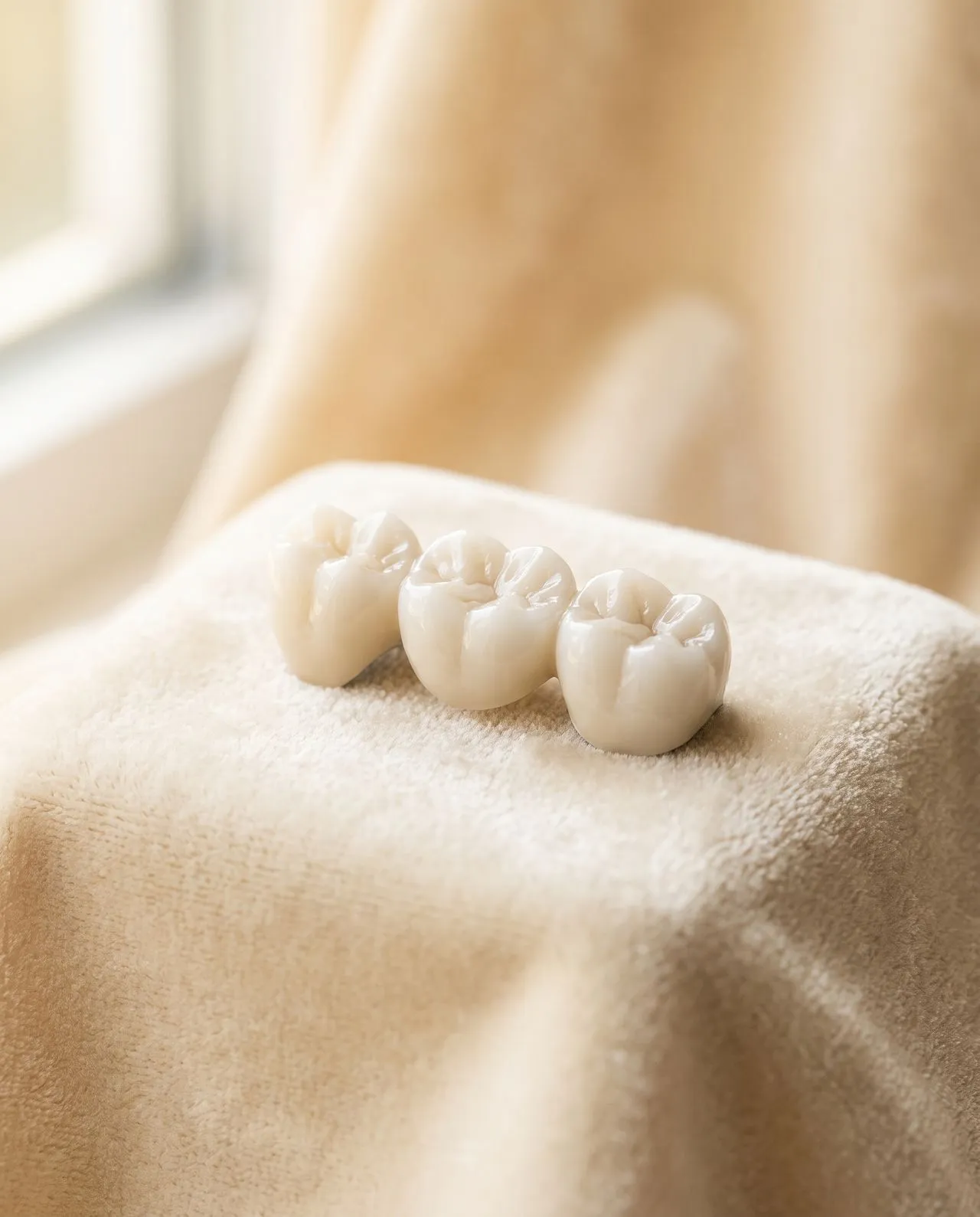
A bridge anchors a replacement tooth, or several, to the healthy teeth or implants on either side of a gap. This literally bridges the space, restoring function and appearance.
The teeth on each side of the gap, called abutments, are fitted with crowns, and the replacement tooth in the middle is connected to them as one solid piece. Because everything is joined together and cemented in place, a bridge stays put and does not come out the way a partial denture does.
Filling a gap is about more than looks. It prevents nearby teeth from shifting and helps you chew evenly. When a tooth is missing, the teeth around it tend to drift and tilt into the space over time, which can throw off your bite and make cleaning harder, so closing the gap protects the rest of your smile too.
What to expect during treatment
Getting a bridge usually takes a couple of comfortable visits. At the first, we gently numb the area, shape the supporting teeth, and take precise impressions or a digital scan. You leave wearing a temporary bridge while your custom one is crafted to match your smile.
At the second visit we check the fit, color, and bite of your permanent bridge and cement it into place. Any mild sensitivity in the supporting teeth typically settles within a few days, and we will share simple tips for keeping the area clean, including how to floss underneath the bridge.
Natural, comfortable results
Your bridge is custom-made to match your natural teeth in shape and color. Once placed, it feels secure and lets you eat and smile with confidence.
Dr. B will make sure your bite is balanced and comfortable before you leave. With good brushing, daily cleaning under the bridge, and regular checkups, a well-made bridge can serve you well for many years.
Bridge or implant
A bridge is a great solution for many patients, while a dental implant may be ideal for others. We will explain the pros of each so you can choose with confidence.
A bridge is often quicker and does not require surgery, which appeals to many patients, but it does rely on the neighboring teeth for support. An implant stands on its own and helps preserve the jawbone, though it takes longer to complete and involves a minor procedure. Your bone health, the condition of the surrounding teeth, your timeline, and your budget all factor into the choice.
Whichever path you choose, we will help you replace missing teeth in a way that lasts. We are also happy to review how each option tends to be covered by dental insurance so there are no surprises.
Restoring smiles across the river valley
A gap from a missing tooth can change how you chew and how you feel about your smile, and we love helping neighbors close that gap close to home. People come to us for dental bridges in Albuquerque from the northwest side and from Corrales and Rio Rancho, where our convenient location makes the whole process, from impressions to final placement, simple to fit into a busy schedule.
Dr. B (Boyd Newsome, DMD) designs each bridge to match your natural teeth and balance your bite, then checks it carefully so it feels solid and comfortable. His calm, patient manner puts nervous patients at ease, and he is always glad to talk through whether a bridge or an implant is the better long-term fit for you.